À Tunis, pour sa première exposition dans sa ville natale, Nadia Ayari déploie une peinture dense, stratifiée, où l’abstraction devient un espace de résistance. Entre héritage de l’Expressionnisme abstrait et imaginaires écologiques, son œuvre fabrique des récits à même la matière.
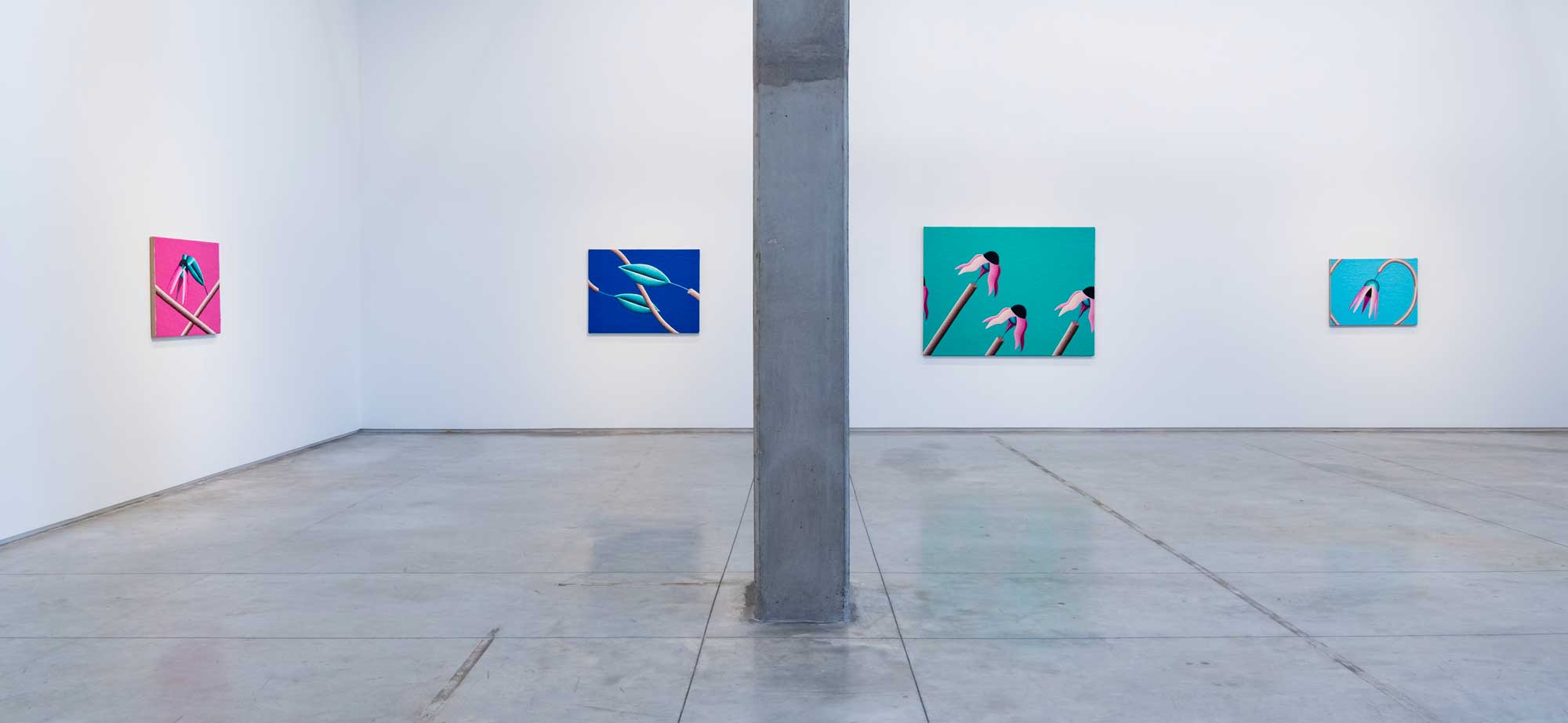
Cette exposition personnelle, la première de l’artiste dans sa ville natale, marque un moment charnière dans un parcours qui n’a cessé d’interroger la capacité de la peinture à porter des récits historiques, écologiques et identitaires. Curatée par Fawz Kabra, l’exposition envisage la peinture comme un acte de résistance et de survie. Des protagonistes botaniques stylisés y négocient gravité, lumière et chaos au sein d’atmosphères saturées. Les surfaces, épaisses, stratifiées, semblent vibrer d’un rythme interne qui résiste à l’effacement et au passage du temps.
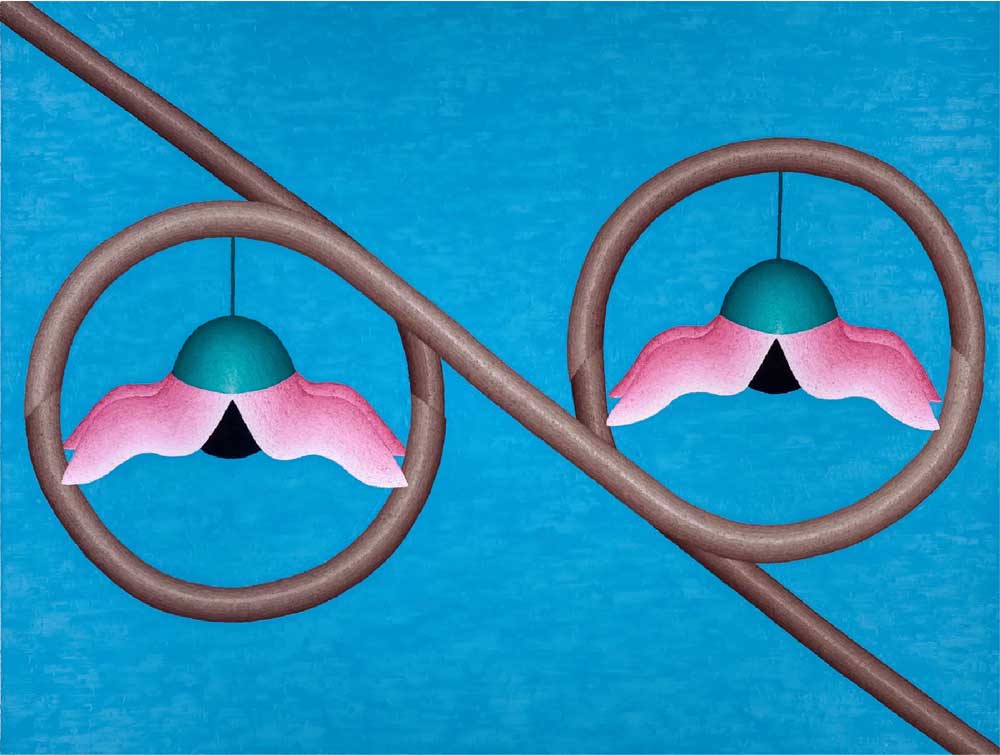
La matérialité est centrale. Chaque œuvre se construit par alternance de couches d’huile, certaines diluées, d’autres riches en matière, produisant un relief visuel et plastique que l’on pourrait qualifier de peinture-sculpture. Ce processus repose sur une dialectique d’expansion et de contraction, conférant à l’image une présence presque organique. « Building the skin with brushes », dit l’artiste. Le temps du séchage, de l’ajout et de la suppression devient un élément structurant de la narration visuelle.L’usage récurrent de motifs inspirés de la flore du Maghreb, figues, feuilles, branches, constitue un élément central de son langage. Ces formes, répétées et modulées, deviennent des protagonistes symboliques, à la fois poétiques et conceptuels. Elles oscillent entre le vivant et l’artificiel, traduisant les tensions de l’Anthropocène et des imaginaires dystopiques. Elles deviennent métaphores de survie, de mutation et de transformation.
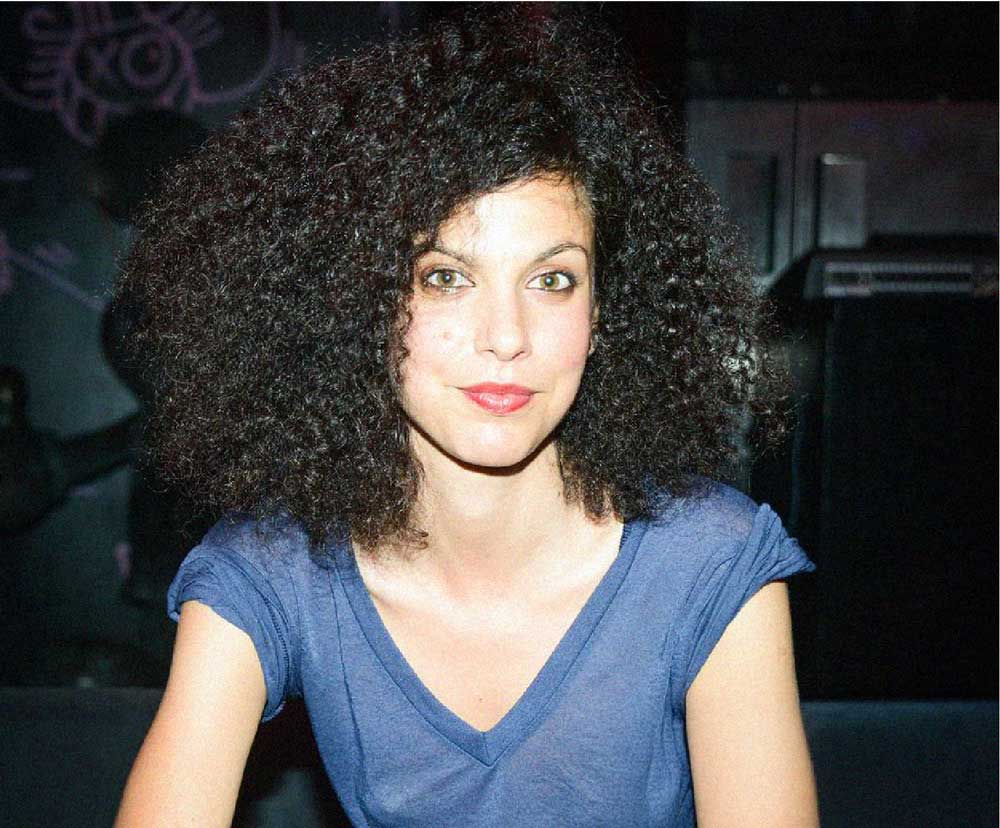
Née en 1981, Nadia Ayari est une artiste tuniso-américaine basée à Brooklyn, New York. Elle a construit une pratique profondément ancrée dans la peinture à l’huile, explorant les territoires de l’abstraction tout en en conservant le potentiel narratif et politique. Son travail, profondément informé par l’héritage de l’Abstract Expressionism, s’en détache pour en désamorcer les récits modernistes héroïques. Inspirée notamment par Philip Guston, elle transforme l’abstraction en outil narratif, capable d’inscrire mémoire, résistance et survie dans la matérialité même de la peinture.Située dans un espace « in-between », sa pratique refuse les classifications binaires entre tradition américaine et héritages européens, entre figuration et abstraction. Chaque forme, chaque couleur, chaque couche de matière participe à une narration ouverte, non linéaire, mettant en tension histoire individuelle, mémoire culturelle et enjeux globaux.
Posthumanisme
Ayari commence son parcours artistique à Tunis, encouragée dès l’enfance par sa mère à s’initier au dessin et à la peinture. Après son baccalauréat, elle s’installe aux États-Unis. Le contexte social et politique de l’après 11-Septembre et de l’invasion de l’Irak nourrit alors une réflexion sur l’identité, l’altérité et la projection culturelle dans l’art. Elle étudie l’histoire de l’art à Boston University avant d’obtenir un Master of Fine Arts à la Rhode Island School of Design, où elle développe à la fois une maîtrise technique et une compréhension critique du potentiel historique de la peinture.Son travail a été exposé à l’international, du MoMA PS1 à New York à la Saatchi Gallery à Londres, ainsi qu’au Musée d’Art Contemporain Africain Al Maaden (MACAAL) à Marrakech. Il a été à la 12e Biennale du Caire et la 3e Biennale de Thessalonique. Ses œuvres figurent aujourd’hui dans des collections de premier plan sur plusieurs continents, notamment la Collection Pinault (Paris), la Dalloul Art Foundation (Beyrouth), le X Museum (Pékin), The Scantland Collection (Columbus), la Fundación Medianoche (Grenade), la Barjeel Art Foundation (Sharjah), le State Museum of Contemporary Art (Thessalonique) et la Saatchi Collection (Londres).
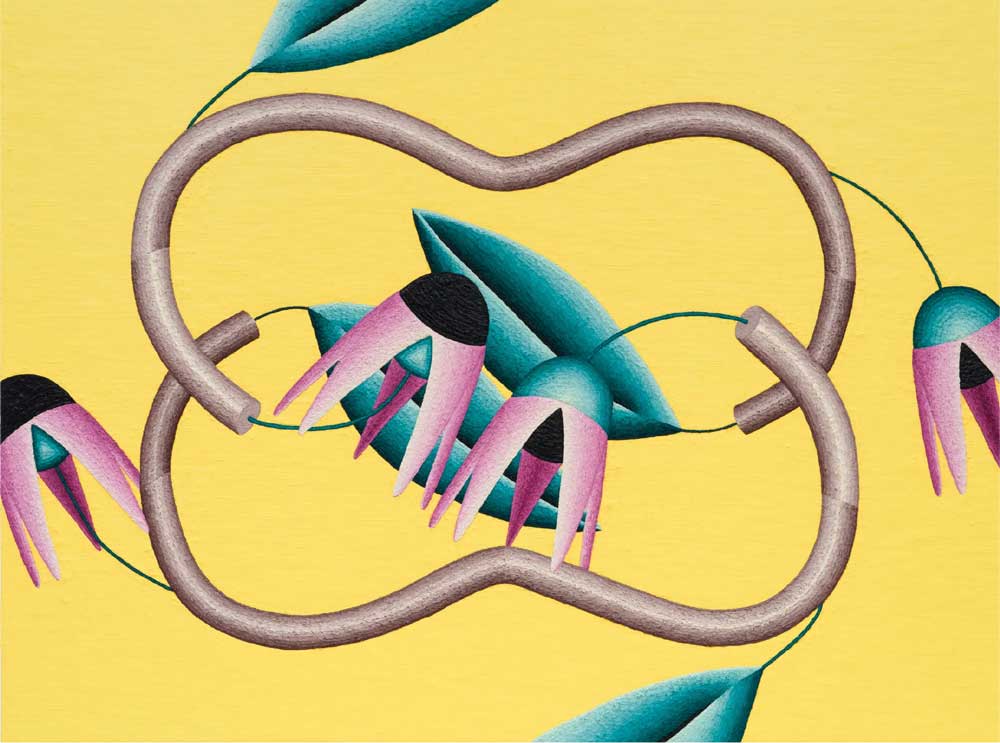
Au fil du temps, l’artiste s’est intéressée à des cadres théoriques comme le posthumanisme, qui décentre l’humain au profit d’un réseau d’interactions entre espèces et environnements. Elle envisage ainsi la peinture comme un espace où les hiérarchies traditionnelles sont remises en question et où d’autres formes d’espérance peuvent se formuler. Avec « Oblivion Rains », Ayari réaffirme la capacité de la peinture à tenir ensemble matérialité et récit, abstraction et mémoire, geste intime et horizon politique.
Farah Sayem
Nadia Ayari, « Oblivion Rains: Notations of Gravity, Light and Resistance », Selma Feriani Gallery, Tunis, du 12 février au 18 avril 2026.
In Tunis, returning to exhibit in her hometown for the first time, Nadia Ayari presents a dense and layered body of work in which abstraction becomes a space of resistance. Drawing on the legacy of Abstract Expressionism while engaging with ecological imaginaries, her paintings generate narratives from within the material itself.
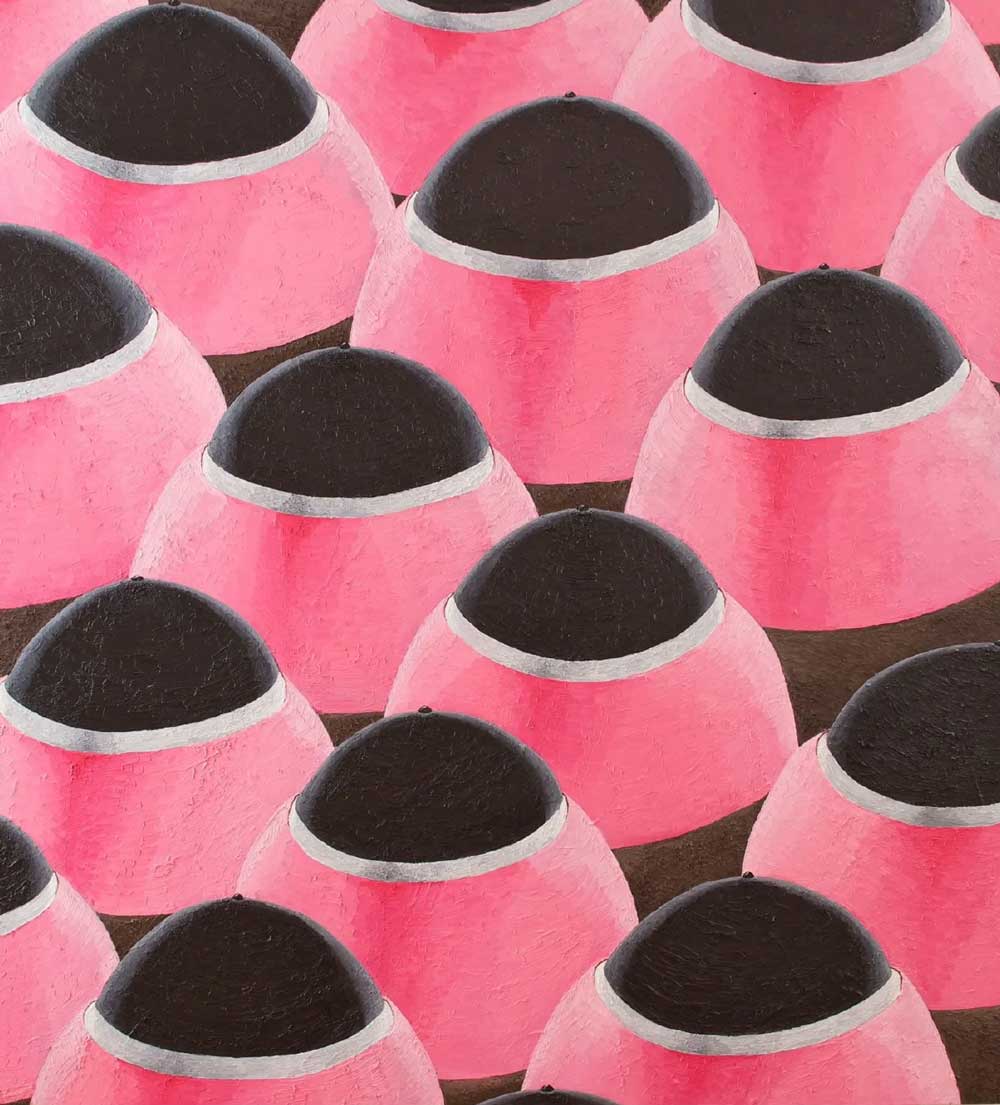
Curated by Fawz Kabra, this solo exhibition marks a key moment in a practice that has consistently explored painting’s capacity to carry historical, ecological, and identity-based narratives. Stylized botanical forms move through saturated atmospheres, negotiating gravity, light, and instability. Thick, stratified surfaces seem to pulse with an internal rhythm, resisting erasure and the passage of time.
Materiality is fundamental to Ayari’s work. Each painting develops through successive layers of oil paint, some thin and diluted, others dense and tactile, creating a physical relief that pushes painting toward sculpture. The process unfolds through cycles of expansion and contraction, giving the image an almost organic presence. “Building the skin with brushes,” as the artist puts it. Drying time, addition, and removal become structuring elements of the work.
Motifs drawn from Maghrebi flora such as figs, leaves, and branches structure her visual language. Repeated and reworked, these forms move between the organic and the artificial, reflecting the tensions of the Anthropocene. They become metaphors for survival, mutation, and transformation.