En se concentrant sur les ventes en volume plutôt que sur les records, 1-54 London trace la voie d’un marché africain durable. Avec des prix stabilisés entre 5 000 et 25 000 USD et une offre curatoriale exigeante, la foire impose une économie du sens. L’Afrique attire de nouveaux public mais n’attend plus d’être découverte : elle s’organise, s’exporte et s’émancipe.
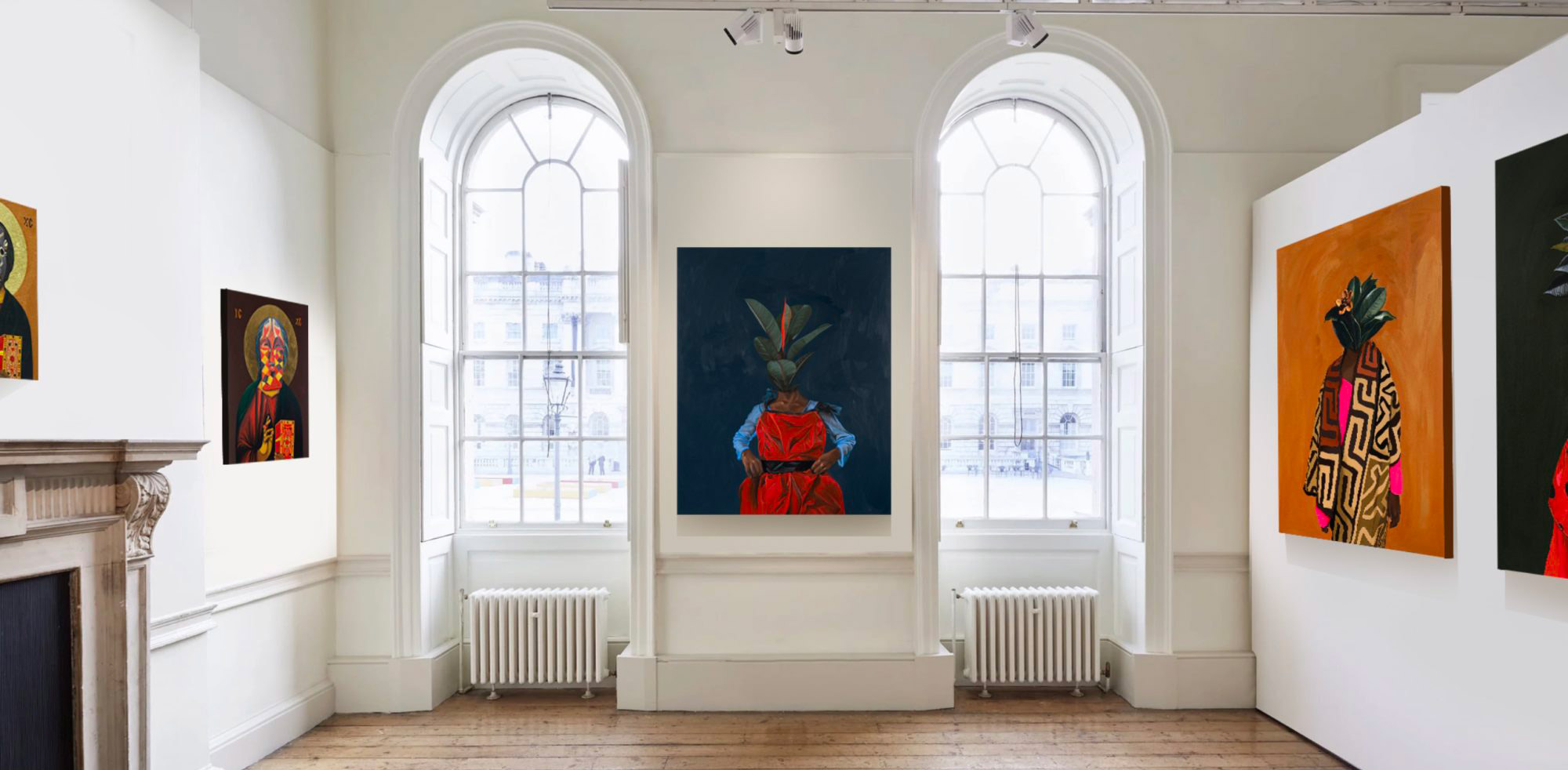
Pendant une semaine des arts effrénée à Londres, la 1-54 Contemporary African Art Fair a tenu sa treizième édition, rassemblant cinquante galeries de dix-huit pays. On observe une diminution du nombre de galeries — dix de moins que l’année précédente — mais également l’arrivée de plusieurs nouveaux participants. Les allées de Somerset House imposent le ton : les galeries s’y déploient dans une atmosphère plus muséale que commerciale. « En étant à Somerset House, nous avons une liberté curatoriale qu’on ne retrouve pas forcément pendant l’édition de New York (…) la force de la communauté se ressent également très fortement », souligne Sam Lambert, cofondateur du collectif Art Comes First, invité dans la section Special Projects. En privilégiant des stands souvent curatés, 1-54 imprime sa marque : plus qu’une foire, elle est aussi un espace de narration et de légitimation. Le ton est posé, réfléchi et pourtant, les échanges commerciaux restent bien présents. Les nouveaux jeunes collectionneurs de Londres, attirés par les propositions niches de la foire, répondent présents avec curiosité. Les institutions aussi. 1-54 se définit par la circulation d’œuvres de haut calibre avec une vraie place marchande.
Retour en grâce de la sculpture
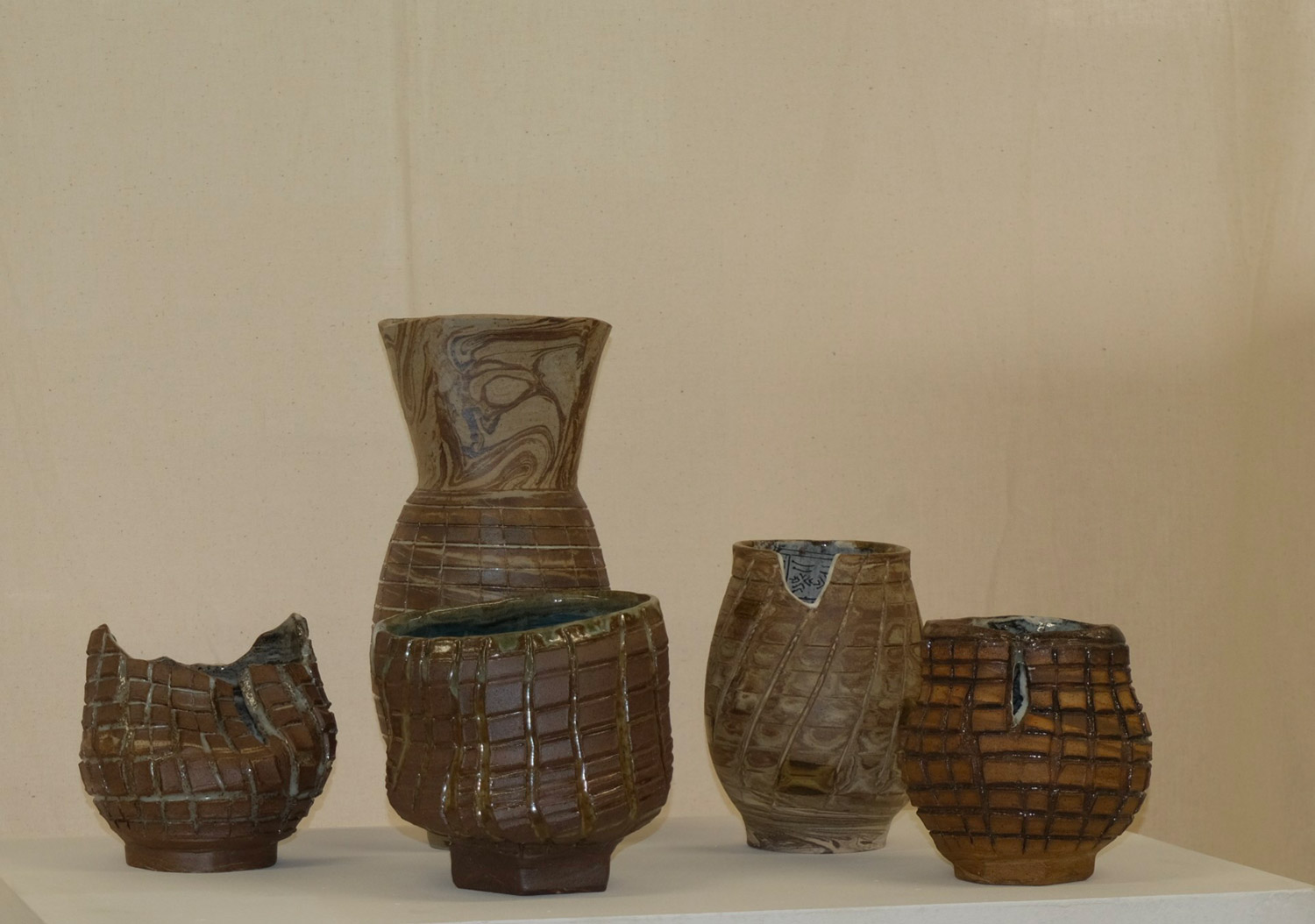
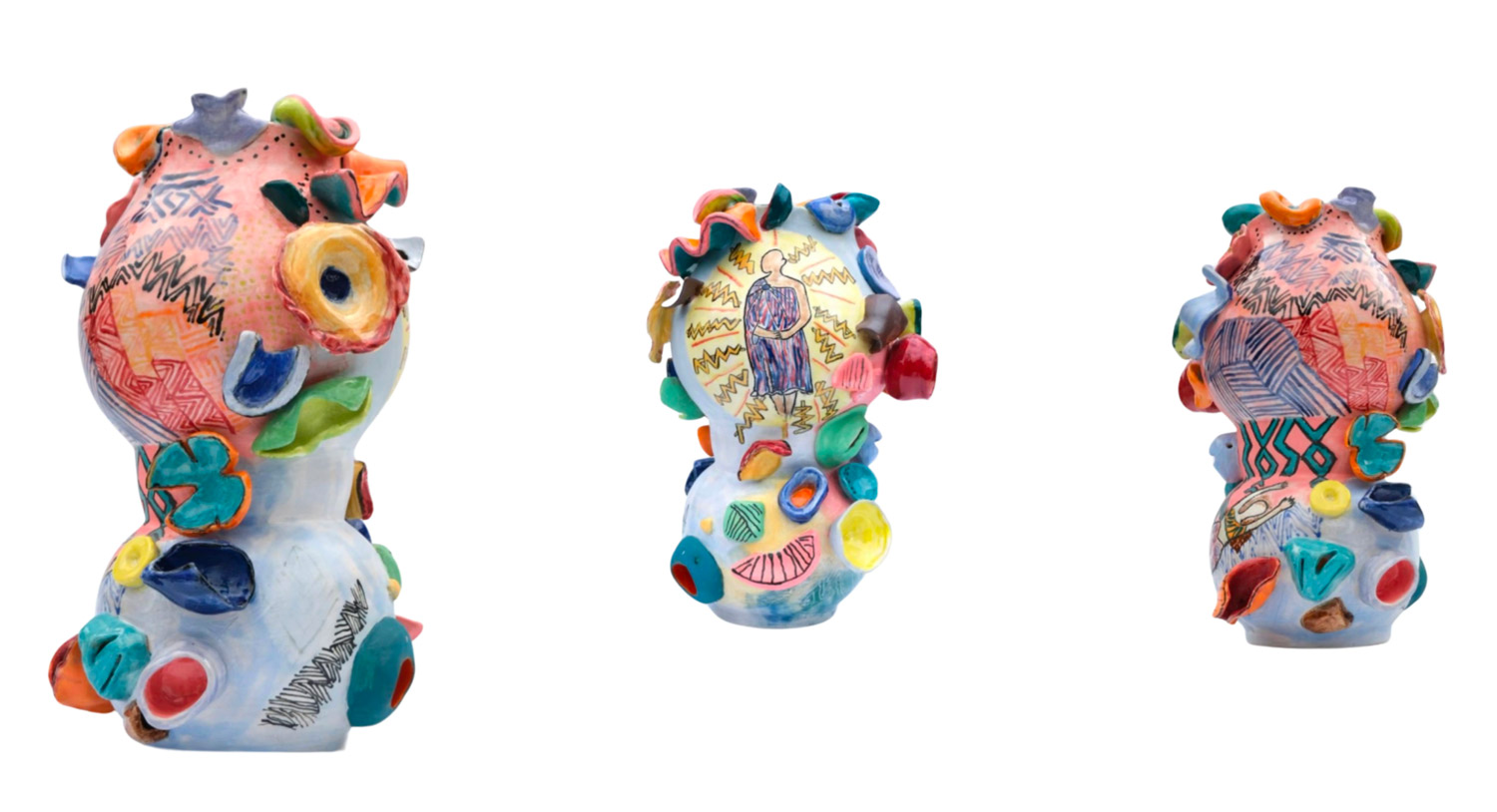
Cette année, la tendance est nette et vient confirmer les observations du Rapport de Marché Art Basel et UBS 2025: baisse des ventes en volume chiffres, augmentation en volume quantité. Les prix se stabilisent dans une moyenne de 5 000 à 25 000 USD, un palier plus accessible qui favorise les ventes en volume. Les galeries saluent une édition équilibrée. Dès le samedi 17 octobre, Albertz Benda (États-Unis) affiche d’excellentes ventes dans une fourchette de 8 200 à 23 500 USD pour Patrick Quarm, Larissa De Souza et Rugiyatou Jallow et affirme avoir suscité l’intérêt d’une institution muséale.L’offre de médiums s’élargit également. Photographies, textiles, collages, installations et peintures cohabitent, mais la sculpture reprend une place de choix. L’Afrique y confirme son héritage sculptural tout en le renouvelant. On retrouve une belle sélection du sculpteur Hervé Yamguen (Cameroun) chez Afikaris, dont quatre sculptures de bronze se sont écoulées entre 5 400 et 10 900 USD. Donald Wasswa (Ouganda) et ses sculptures en ébène, acacia et cuivre attirent également les visiteurs sur le stand de Circle Art Gallery. Chez ArtHarare (Cape Town), une sélection de Whitney Bulman (Zimbabwe) explore un processus sculptural décrit par l’artiste comme une forme de guérison. Le stand, curaté sous l’intitulé « Tariffs – The Cost of Belonging » résonne particulièrement : son fondateur Richard Mudariki y aborde les « taxes invisibles » que paient les artistes avant même que leurs œuvres ne circulent. « Au Zimbabwe, où le marché de l’art local est quasi inexistant, la reconnaissance se joue ailleurs ; rester sur place relève du choix politique autant qu’économique», explique Mudariki.
La force de frappe du Nigéria
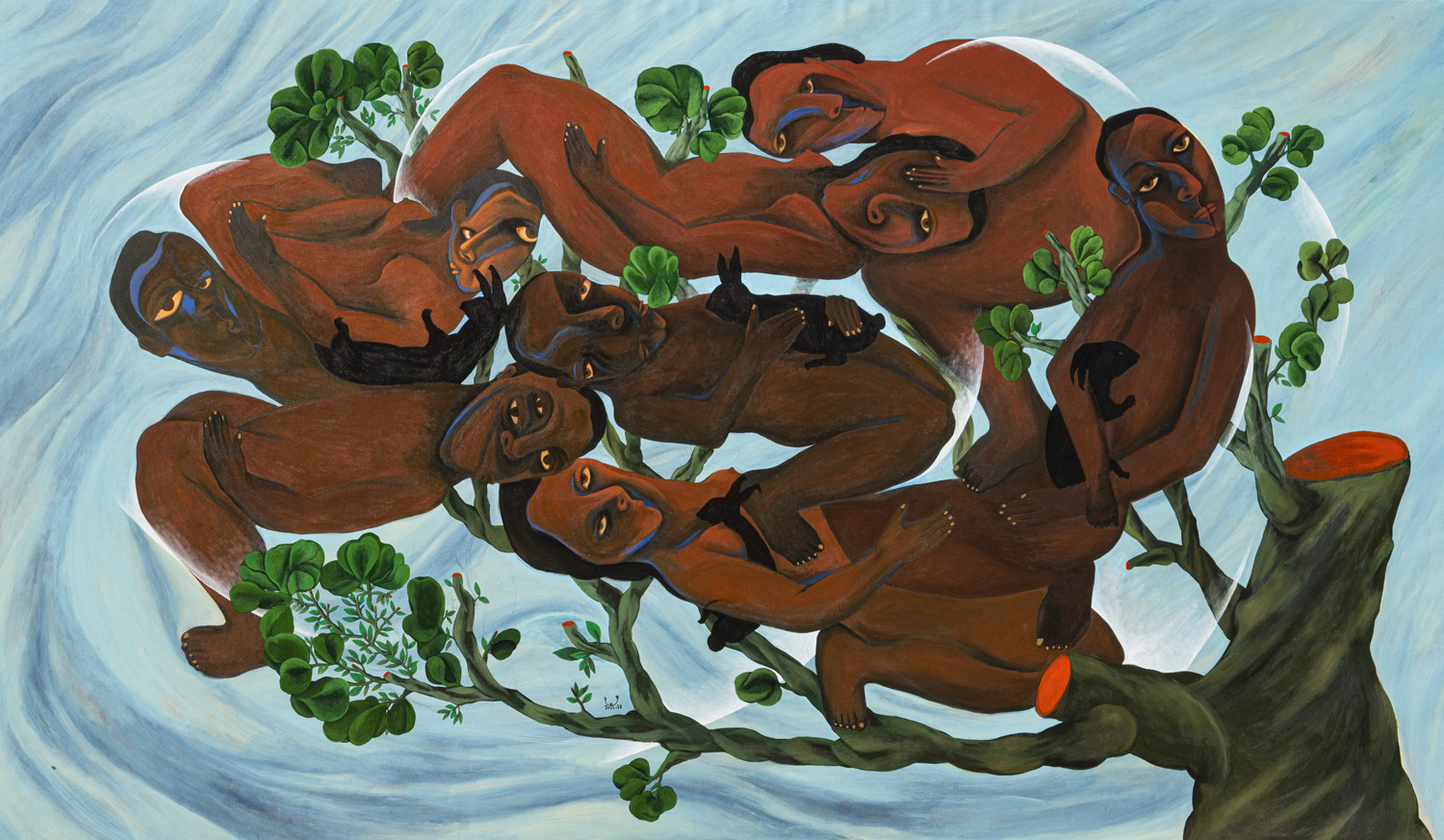
Derrière les stands, la foire dessine une géopolitique du marché africain. Les œuvres de la scène nigériane, véritable moteur du marché, se situent dans une fourchette de 2 000 à 75 000 USD, avec une concentration autour de 10 000 à 25 000 USD, confirmant une dynamique désormais stable et internationalisée. Ayant fait le voyage depuis Lagos, on retrouve les galeries Affinity, O’DA, Rele, SOTO et The 1897 Gallery, ainsi que trois galeries internationales qui continuent de soutenir la scène nigériane – notamment Gallery Rosenfeld (Londres), qui présentait exclusivement Ndidi Emefiele, déjà présente dans plusieurs collections de renom. Trois de ses pièces, à 27 300 USD chacune, s’étaient déjà écoulées dès l’ouverture de la journée samedi, tandis que sa pièce phare Ball Miners (220 x 270 cm) était affichée à 80 000 USD.L’ouverture de l’exposition « Nigerian Modernism » à la Tate Modern, pendant la même semaine, vient d’ailleurs cimenter la force créative du pays : fruit de quatre années de recherche, elle retrace la richesse de la scène moderniste nigériane et ses résonances avec la création actuelle. On retrouve les échos de cette rétrospective sur le stand d’Ed Cross Gallery, dans une œuvre majeure sur papier de Ugonna Hosten. Le grand format qu’elle y présente revisite la mythologie féminine Igbo, convoquant des figures matriarcales comme symbole de puissance.
On retrouve les deux grands modernistes soudanais Ibrahim El Salahi, chez Vigo Gallery, qui présentait d’ailleurs une pièce datée de 1999 chez Vigo Gallery (Londres), et Salah Elmur chez Gallery 1957 (Accra / Londres).
La RDC, plus discrète, est pourtant en constante progression. AKKA Project a vendu l’intégralité des œuvres de Beau Disundi Nzazi (3 200–5 000 USD), à l’instar du sold-out de la sélection de huit pièces de Moridja Kitenge Banza chez Hugues Charbonneau (3 800–10 800 USD). Les artistes congolais étaient également représentés par Kub’Art Gallery et par l’espace de la Fondation Picha / Biennale de Lubumbashi, notamment avec Nkembo Moswala et sa technique unique d’encre sur papier Penda. L’installation textile iridescente et les œuvres photographiques de l’artiste belgo-congolais Léonard Pongo chez Project Loop ont eu le mérite d’interrompre le trafic dans la West Wing de Somerset House tout au long de la journée VIP.Timide présence de l’Afrique du Nord
À l’inverse, le Maghreb reste sous-représenté. On note l’absence de galeries marocaines, à l’exception de Loft Art Gallery et de sa fondatrice Yasmine Berrada, qui réalise des ventes rapides dès le premier jour : onze pièces de Nassim Azarzar (1 100–6 300 USD), neuf d’Amina Agueznay (3 000–13 300 USD) et deux de Khadija El Abyad. Les artistes marocains connaissent toutefois une forte popularité chez les galeries internationales : une œuvre de la nouvelle série de Mouhcine Rahaoui a trouvé preneur pour plus de 11 000 USD sur le stand d’Afikaris (Paris). Les artistes confirmés Hassan Hajjaj et Mahi Binebine apparaissent également chez les galeries françaises 193 Gallery et Nathan Chiche. Rare présence tunisienne avec Massoud Hayoune, artiste très populaire sur les réseaux sociaux, représenté par Larkin Durey (Londres).

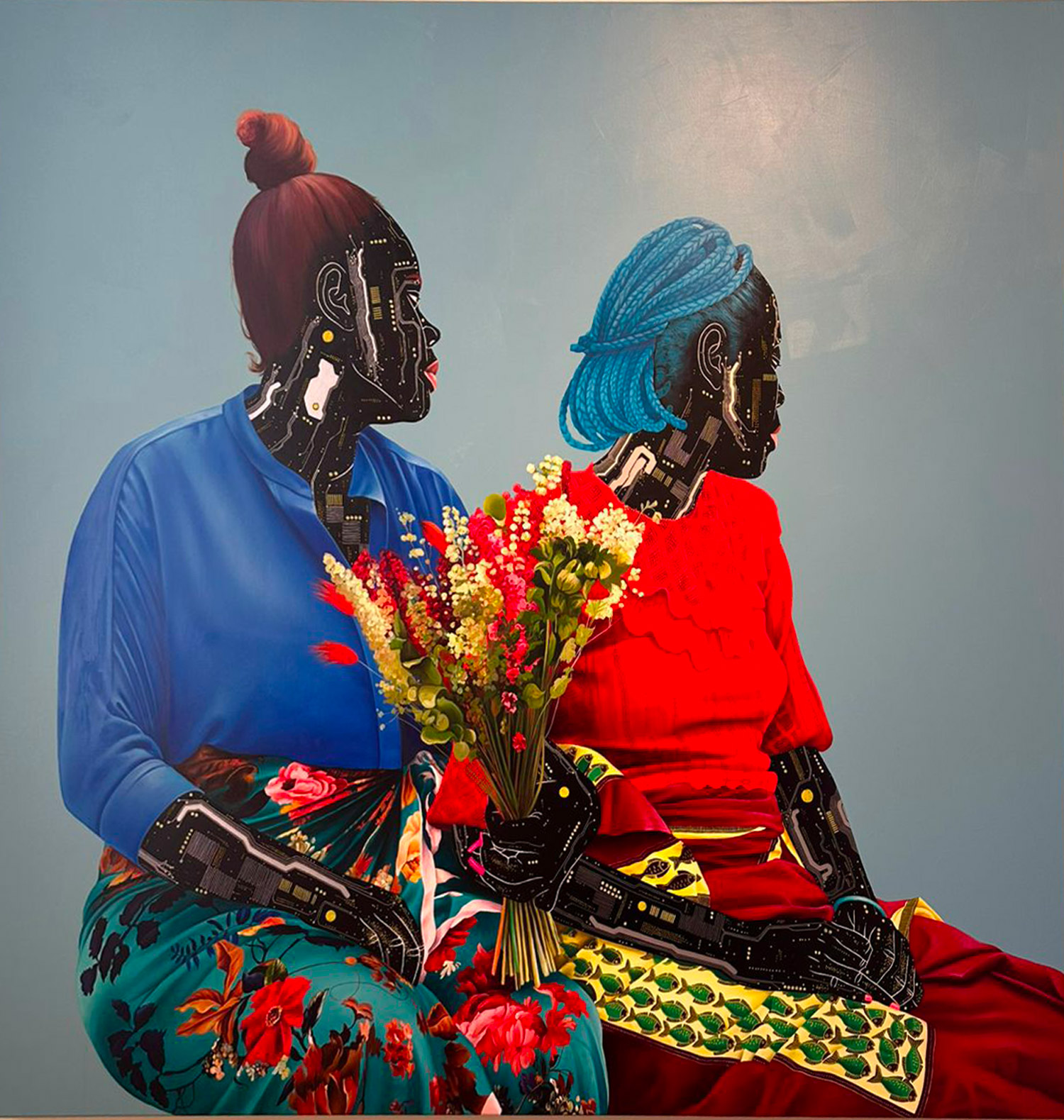
Deux galeries égyptiennes, Gallery Misr et Tintera, complètent la présence nord-africaine marginale à 1-54 cette année. Gallery Misr (Le Caire) a notamment signé de belles premières ventes autour de 9 000 USD pour sa première participation à la foire de Londres. On y découvre une sélection féministe égyptienne engagée, avec les œuvres intimistes de Hend Adnan et celles de Souad Abdelrasoul, dont le style rappelle celui de Salah Elmur.
Treize ans après sa création, 1-54 London n’est plus une alternative à la Frieze Week, mais son contrepoint nécessaire. La fondatrice, Touria El Glaoui l’a souvent rappelé : s’aligner sur Frieze était un pari, celui d’amener 1-54 au cœur du plus grand moment de l’art à Londres plutôt qu’en marge. Treize ans plus tard, ce n’est plus un simple coup de calendrier. 1-54 est devenu incontournable pour les publics déjà familiers des scènes du continent et désormais indispensable pour ceux qui cherchent à les comprendre.Pendant que le marché de l’art cherche à repenser les modèles des foires, 1-54 Londres esquisse une proposition où la narration et la communauté peuvent donner le ton. En conciliant exigence curatoriale et accessibilité économique, la foire dresse le portrait d’un marché africain confiant qui impose son propre récit.
Rania Kettani
By focusing on volume rather than record-breaking sales, 1-54 London points the way toward a more sustainable African art market. With prices holding steady between USD 5,000 and 25,000 and a refined curatorial vision, the fair champions an economy of meaning. Africa continues to draw new audiences, but it no longer waits to be discovered: it organizes, expands, and defines itself.
During a busy art week in London, the 1-54 Contemporary African Art Fair held its thirteenth edition to date, gathering fifty galleries from eighteen countries. While the number of exhibitors has fallen by ten compared to last year’s, several new participants joined the fold. Galleries unfolded curatorial presentations in an atmosphere that felt more institutional than commercial, against the backdrop of the renowned Somerset House. “Being at Somerset House gives us a curatorial freedom we don’t necessarily have in New York… the community also really showed up,” noted Sam Lambert, co-founder of the collective Art Comes First, who was curating a Special Projects section this year. By favoring curation, 1-54 defines itself as a space of narrative and legitimization. The tone was poised and deliberate, yet exchanges were very much alive. A new generation of London collectors proved both present and curious, alongside museum institutions, probably drawn by the fair’s niche proposal. 1-54 reaffirmed its position as a marketplace where high-caliber works circulated briskly throughout the week, their steady sales underscoring both the fair’s commercial credibility and its role as a true center of gravity for the African art market.
The Great Return of Sculpture
This year’s trend was clear and confirmed the observations of the Art Basel & UBS Art Market Report 2025: low total sales value but a high volume of transactions. Prices of artworks stabilized within the USD 5,000–25,000 range—a more accessible bracket that encourages higher sales turnover. Galleries hailed this as a balanced edition. By Saturday, October 17, Albertz Benda (United States) reported strong results between USD 8,200 and 23,500 for artists Patrick Quarm, Larissa De Souza, and Rugiyatou Jallow, and mentioned receiving interest from an institutional buyer.
The range of mediums also widened. Photography, textiles, collage, installation, and painting occupied the space, but sculpture claimed a central place this year: Africa reaffirms its sculptural heritage in contemporary times. Afikaris Gallery (Paris) presented a beautiful selection of works by Cameroonian sculptor Hervé Yamguen, whose four bronze sculptures sold between USD 5,400 and 10,900. Donald Wasswa (Uganda) drew crowds at Circle Art Gallery with his sculptures in ebony, acacia, and copper. At ArtHarare’s booth (Cape Town), Whitney Bulman (Zimbabwe) explored sculpture as a process of healing. ArtHarare’s founder Richard Mudariki’s curated his booth around the title “Tariffs – The Cost of Belonging,” where he offers a reflection on the “invisible taxes” artists pay before their works even circulate. “In Zimbabwe, the art market doesn’t exist, » a lot of times, recognition happens elsewhere, and staying in the country is as much a political decision as an economic one, he explains.

Nigeria’s Driving Force
Beyond the booths, the fair revealed a geopolitical structure of the market. The Nigerian scene, a true engine of art sales in recent years, showed works ranging from USD 2,000 to 75,000, with a strong concentration around 10,000–25,000, confirming a stable, internationalized dynamic. Traveling from Lagos, galleries such as Affinity, O’DA, Rele, SOTO, and The 1897 Gallery were joined by international galleries exhibiting the Nigerian scene. Among them was Gallery Rosenfeld (London), which devoted its booth entirely to Ndidi Emefiele, with three of her works sold on the fair’s opening day at USD 27,300 each, while her « pièce phare » Ball Miners (220 × 270 cm) was listed at USD 80,000.
The opening of the Nigerian Modernism exhibition at Tate Modern, held during the same week, cements the country’s growing influence on the global stage. The retrospection, four years in the making, traces the richness of Nigerian modernist art and its echoes in contemporary practice. The spirit of Igbo art could be felt at Ed Cross Gallery’s booth, where Ugonna Hosten presented a large-scale work on paper exploring Igbo feminine heroins and matriarchal figures as symbols of strength.
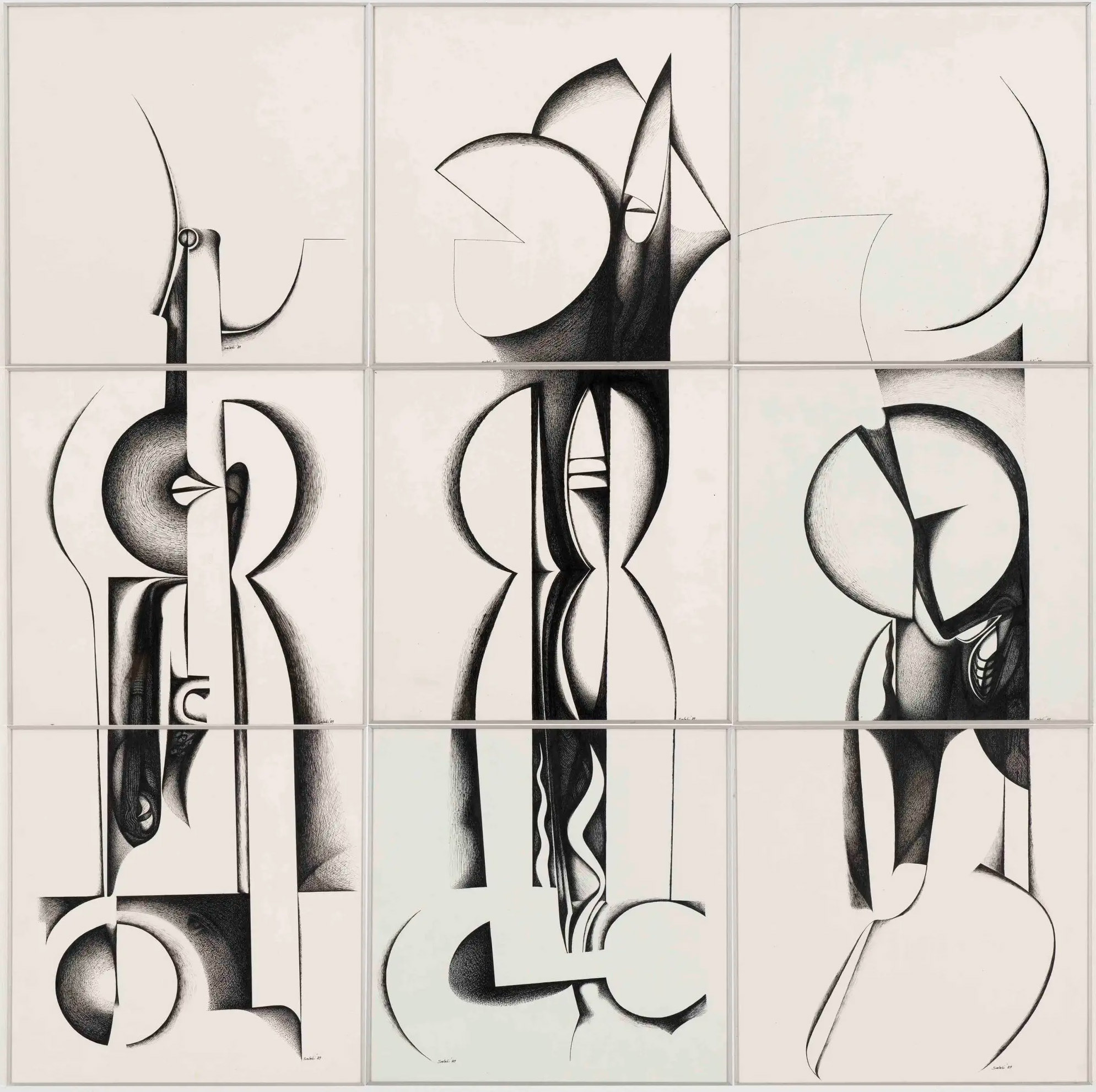
The great Sudanese modernists were also represented: Ibrahim El-Salahi appeared at Vigo Gallery (London), with an exceptional work on paper dated from 1999, while Salah Elmur was shown by Gallery 1957 and others (Accra/London).
The Democratic Republic of Congo, more discreet but steadily ascending, showed impressive momentum. Two complete sell-outs for DRC artists: Beau Disundi Nzazi, at AKKA Project, for pieces between USD 3,200–5,000, and the eight piece presenation of Moridja Kitenge Banza’s at Hugues Charbonneau, in a range of USD 3,800–10,800. DRC artists were also represented by Kub’Art Gallery and the Fondation Picha/Biennale de Lubumbashi, including Nkembo Moswala and his unique ink-on-paper « Penda » technique, selling between USD 1600 and 7300. An iridescent textile installation, and photographic works by Belgian-Congolese artist Léonard Pongo (Project Loop) caused traffic stop throughout the VIP day.
A Timid North African Presence
Contrastingly, the Maghreb scene remained underrepresented. Moroccan galleries were mostly absent, with the exception of Loft Art Gallery and its founder Yasmine Berrada, who made rapid sales on the opening day: eleven works by Nassim Azarzar (USD 1,100–6,300), nine by Amina Agueznay (USD 3,000–13,300), and two by Khadija El Abyad. Moroccan artists nonetheless proved popular with international galleries: Mouhcine Rahaoui’s new series sold for over USD 11,000 at Afikaris (Paris), while established figures Hassan Hajjaj and Mahi Binebine appeared at 193 Gallery and Nathan Chiche (Paris). Rare Tunisian presence, with the blue social-media famous works of Massoud Hayoune, at Larkin Durey’s booth (London). Two Egyptian galleries, Gallery Misr and Tintera, completed the North African contingent. Gallery Misr (Cairo) achieved strong debut sales around USD 9,000. They presented an engaged, feminist selection with taking and intimate works by Hend Adnan, and Souad Abdelrasoul, whose visual language blends with life-partner Salah Elmur’s.
A Market With Its Own Rhythm
Thirteen years after its creation, 1-54 London is no longer an alternative to Frieze Week but its essential counterpoint. As founder Touria El Glaoui often said, aligning with Frieze was a deliberate choice: to bring 1-54 into the heart of London’s biggest art moment rather than its margins. Thirteen years later, 1-54 is a statement: it has become indispensable to audiences familiar with African art scenes, and to those now seeking to uncover them.
As conversations around the global art market reconsider the model of art fairs, 1-54 London sketches an interesting proposition: one where storytelling and community set the tone. By reconciling curatorial rigor with economic accessibility, the fair paints the portrait of an African market that is confident, and where actors claim authorship of their own narratives.
Rania Kettani